Candidly sharing my experience of being diagnosed with, battling, and recovering from HER2+ Stage 2b Invasive Ductal Carcinoma (breast cancer) at 27 years old in 2021.
It’s been four years since I was diagnosed with breast cancer on March 11, 2021.
This is the first year I didn’t write or post something on my diagnosis day, but it’s not like I forgot about it. It’s not something I could forget even if I wanted to.
On March 11, my husband and I traveled to San Francisco. I was heading in for my work offsite, and he traveled with me to work remotely so we could have a little vacation time together over the weekend.
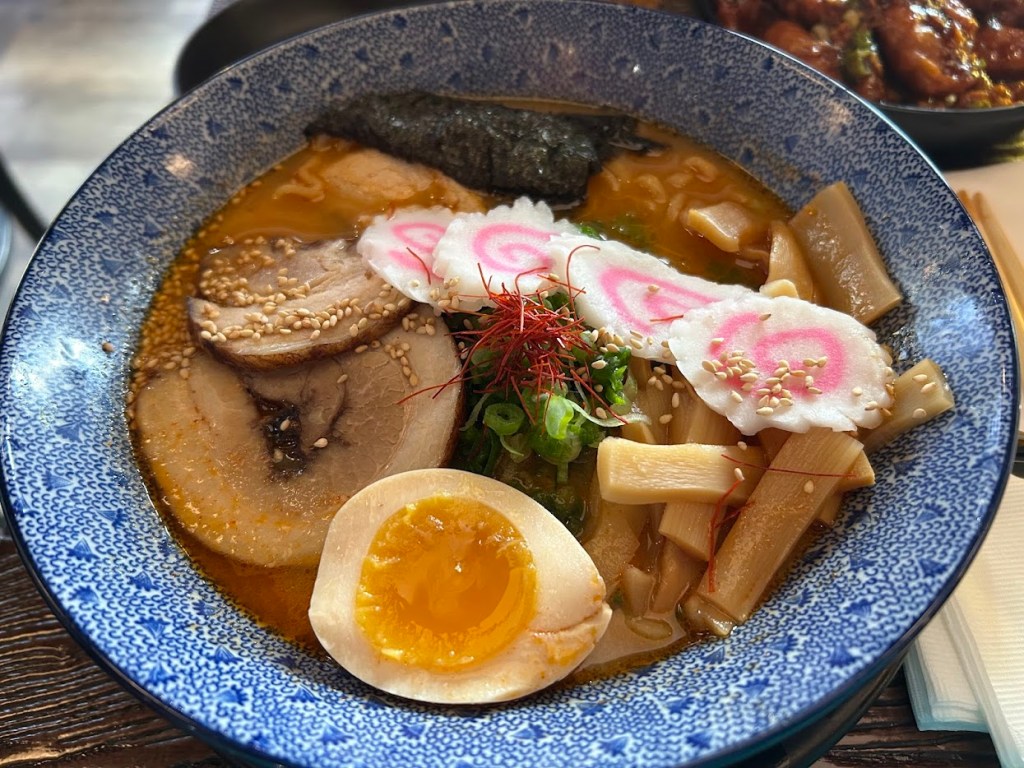
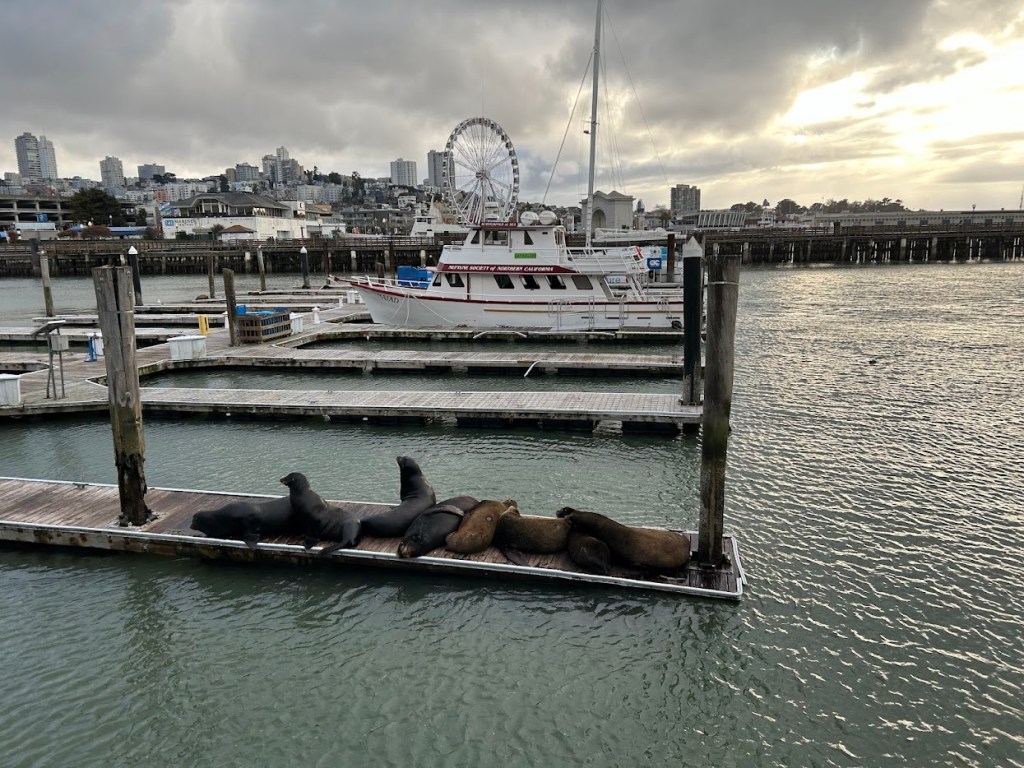
After we settled in at our hotel, we grabbed delicious bowls of ramen, then went for a leisurely walk from the Ferry Building down to Pier 39. We bounced around a few shops at the Pier, visited the sea lions, grabbed coffee, and headed back to the hotel for the evening. It was a beautiful day filled with sunshine, laughter, and the salty wind blowing through my hair.
My hair.
My hair that I lost almost fully while undergoing 13 grueling months of treatment for my unbelievable breast cancer diagnosis. My hair that I cried about losing probably even harder than initially hearing I was diagnosed with cancer. My hair that I now have again, my life that I now have again. A life so beautiful and full of experiences that I can only be grateful to God, modern medicine, and the love of my husband, family, and friends that supported me throughout my cancer journey.
So no, I didn’t forget about my diagnosis day – I was just out and about, busy living life. A life that I wasn’t sure I’d be able to live again a mere 4 years ago. So much of my life has changed since that fateful diagnosis day, and I couldn’t be more grateful for every tired morning, late night, sunburn, raindrop, and big breeze tangling my long, wavy hair.
When I was in active treatment for breast cancer, I had 6 rounds of chemotherapy every 3 weeks on Thursday mornings. The first 14 days post-infusion were absolute hell from an eating perspective. I wasn’t able to keep anything down, including most chemo-friendly “safe foods,” e.g. rice, applesauce, unseasoned chicken, fruit, and any/all water.
This was because the chemo affected my taste buds, made my tongue numb, and gave me the worst possible indigestion – which I scarcely experience under normal circumstances. For those two weeks, the concept of eating was like hell on earth.
You never realize how much food absorbs your thoughts until you can’t eat. You think about food constantly, and food is everywhere. In the media you watch. In advertisements. Outside in the air, the smells. When you leave your house, when you scroll your phone, no matter which way you turn, something food-related is bound to pop up and remind you that you can’t have any of it.
I would drive myself crazy watching cooking and mukbang videos on TikTok because I wanted to eat all of the glorious foods the creators made and ate, and if my energy levels were up, I’d cook something for my parents (who I lived with at the time) that I wanted to eat, but I couldn’t, so I lived vicariously through the meals I made.
For the smaller window between days 10–14, I would be able to eat at a limited capacity, and that capacity included mostly bland, flavorless foods that wouldn’t “shock” my palate or upset my digestive tract.
And if any of you know me at all, as a Mexican-American woman, eating bland, tasteless, unseasoned food was basically a second hell for me. Under normal circumstances, I am an adventurous eater who gravitates toward highly seasoned, flavorful foods with ample spice, citrus, and salt – all of the best flavors in the world.
One day, about 7 days post-chemo, I was feeling brave, and I attempted to eat pico de gallo my dad made. I have an insane spice tolerance, but I couldn’t keep one bite down. Imagine the worst heartbreak you’ve ever experienced. It was like that, but a million times more heartbreaking.
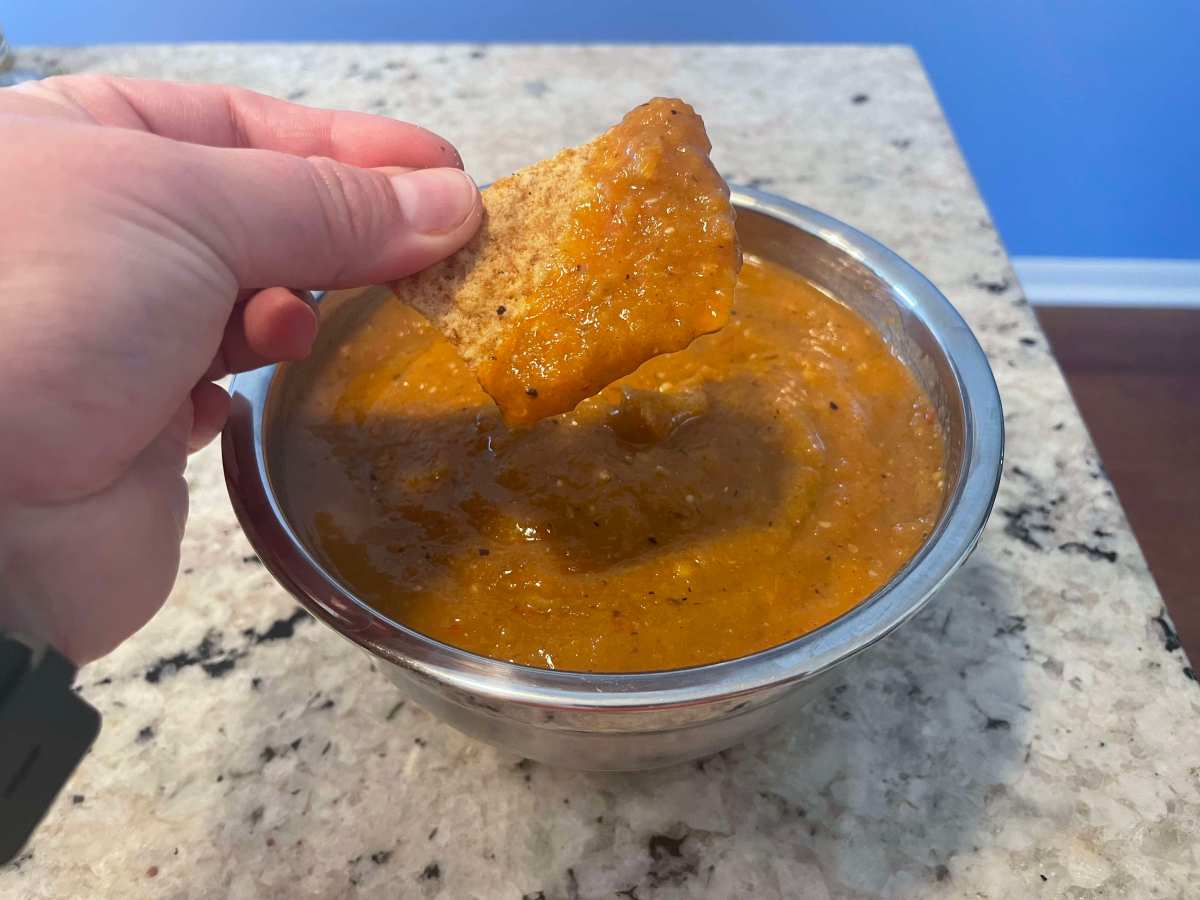
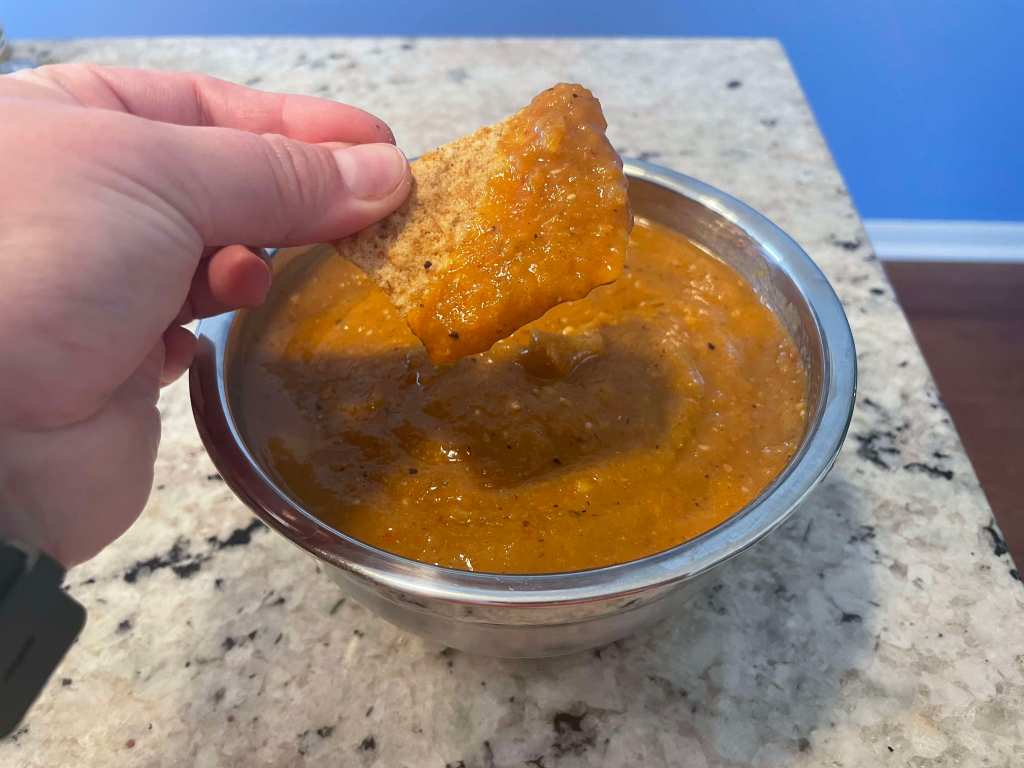
Once the start of week 3 came around (the week where I’d have chemo again on Thursday), my tongue started feeling normal and I was able to taste foods like before, including all of the spicy goodness I could handle. A comfort food of mine is chips and salsa. But not what you’d buy at the grocery store – homemade roasted salsa my parents taught me how to make.
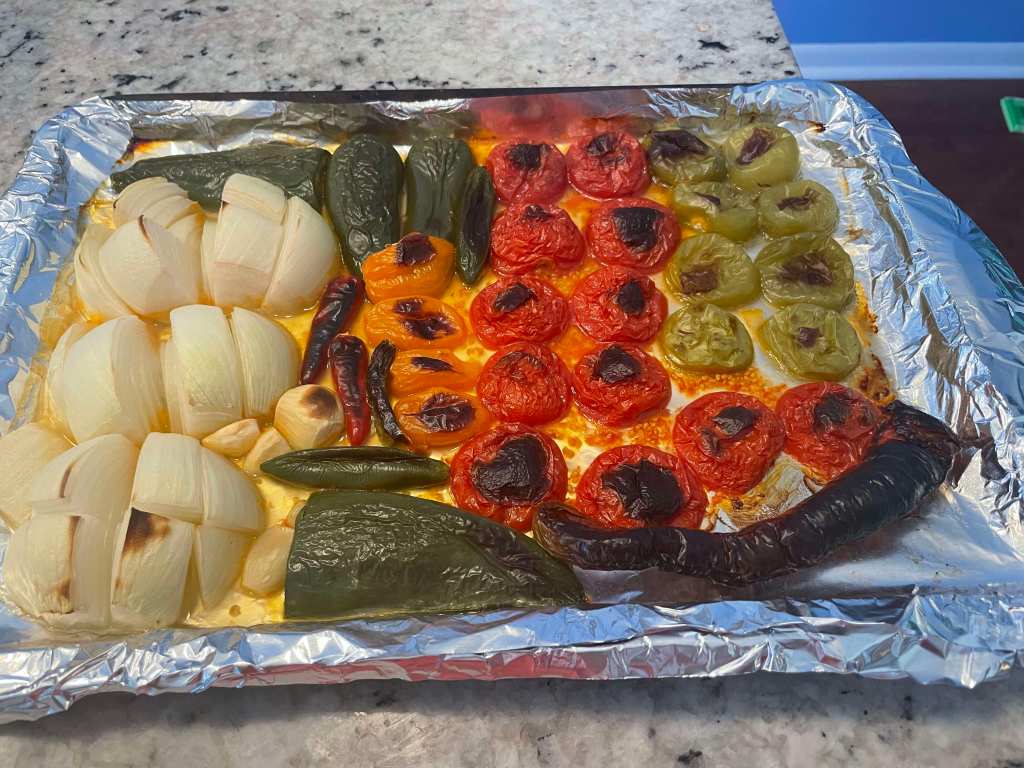
I’d roast tomatillos, tomatoes, serrano and habanero peppers, garlic, and onion until blistering, blend them all together, add a generous squeeze of lime, season with salt and pepper, and take that first glorious scoop on a sturdy Mexican tortilla chip and let it dance on my tongue. All of the flavors, like colors, brightened my spirits and seasoned my palate with an unmatched joy I can hardly express through writing.
Fortunately, once I finished treatment, my tastebuds returned in full, and I’ve been happily able to eat anything I desire – including the best salsa I can make, at any time of day, whenever I damn well please. Would you like some?
Breast Cancer Awareness month begins October 1st, annually.
As a woman who has undergone treatment for breast cancer, my perception of all things breast cancer has changed since my diagnosis, treatment, and post-treatment survivorship status. Because of my experience as a breast cancer patient during BCA month, I’d like to inform all of you about some things relating to breast cancer and support that you can take into consideration during the month of October – and always.
Check your breasts
Women, check your breasts. Every month. If something feels off, go to the doctor. Get them checked out. It can happen to you. One in 8 women will get breast cancer in their lifetime. And more women are getting breast cancer earlier in life. I found my tumor in December 2020 at 26 years old and was diagnosed at 27. Despite the recommendation that only women over 45 get regular mammograms, this isn’t just a cancer that happens to grandmas, moms, and aunts. It can happen to any woman at any time. And it does.
Stage 4 needs more
While breast cancer is often highly curable, metastatic breast cancer is not. It is fatal. Women may live for many years with the disease, but so far there is NO cure for metastatic (also known as Stage 4) breast cancer. Stage 4 needs more funding, research, and recognition.
Metastatic breast cancer awareness day is October 13th annually, and you can learn more about the disease and how to help. Donations are paramount to increasing research for metastatic breast cancer. If you’re wondering which of the many BC orgs to give your coins to, consider Metavivor.
Watch where you buy your pink “support” gear from
If you want to wear pink in support of breast cancer awareness, go for it! But first find out whether where you’re buying pink gear from is actually donating part of the proceeds to breast cancer research foundations or not. If not, find a store that is and buy from them instead. Better yet, find specific breast cancer organizations and donate to them directly.
A lot of companies like to make a quick buck off of people who either think they’re being supportive and don’t know better or off survivors/thrivers looking to buy some gear for themselves. We don’t want this. Wearing pink without actually donating to foundations that help breast cancer patients doesn’t support a damn thing.
Instead, look for a BCRF (Breast Cancer Research Fund)label or partnership acknowledgement on a company’s website. If you don’t see copy on a business’ website that indicates they are donating a portion of proceeds to a breast cancer-specific organization, chances are they’re pinkwashing and just benefitting from the “hype” around Breast Cancer Awareness Month by selling pink gear with no intention of donating any money from their sales.
Here are a few clothing brands that donate proceeds to BCRF or other breast cancer organizations:
Lane Bryant: Will donate 90% of the purchase price of a Cares Card to the Breast Cancer Research Foundation.
BCAM campaign from Lane Bryant, October 2024
Torrid: Will donate 100% of shoppers’ donations to the National Breast Cancer Foundation (US) and Rethink Breast Cancer (CA), as well as $1 from every bra they sell now through the end of October.
BCAM campaign from Torrid, October 2024
Lilly Pulitzer: Will donate $25,000 to the Breast Cancer Research Foundation.
BCAM campaign from Lilly Pulitzer, October 2024
Pay attention to what you say and how you say it to women battling breast cancer
Don’t tell someone who gets diagnosed with breast cancer that they’re *lucky* because they got the *good* cancer. While earlier stages of breast cancer are highly treatable, treatment – especially for those who have to endure chemotherapy, radiation, and/or surgery – is painful and life-altering.
I dealt with significant hair loss despite cold capping, severe face and arm rashes, gastrointestinal issues that caused me to drop 40 pounds over four months’ time, nail loss and discoloration, and medication-induced side effects like vomiting, diarrhea, hot flashes, and fatigue, all at 27 years old. And really, no cancer is “GOOD”.
Also, we don’t want to hear how your cousin’s friend’s grandma “had breast cancer, too!” …and then died from it.
If you’re talking about someone close and personal to you who died from breast cancer (a direct relative, a friend), that’s different. But still, talking about death could be triggering to breast cancer patients – ESPECIALLY those with metastatic breast cancer. Ask before sharing a story about someone who died from the same cancer someone is currently going through treatment for.
Do your research to help others
All it takes is a quick Google search: “breast cancer awareness month donations” for multiple options to pop up. If you can’t afford to donate, share a post on social media and help bring awareness to others. Breast cancer isn’t something we should brush off because “oh everyone knows about it”. I thought everyone knew about it, too, until I was diagnosed and realized I didn’t know shit.
We need you to speak up, donate, and participate. Because without your voice supporting those around you, the voices of those who suffer from this disease – primarily women – won’t get the funding, help, and recognition they deserve.
If you’d like to discuss breast cancer in more detail, please reach out via my contact page for availability for speaking engagements throughout October 2024 and beyond.
Three years is one of those weird points in time that feels so recent, yet so long ago all at once.
Three years ago today was March 11, 2021.
We were immersed in the pandemic for a full year, had acclimated to working from home as the “norm,” and a lot of things in my life were different. I had just gotten promoted to Sr. Editor with my old company. I was in the midst of house hunting with my boyfriend. I was actively planning to go on trips and enjoy my 27th year of life to the fullest.
All of my big plans were put on hold as I underwent a grueling 13-month treatment plan consisting of:
IVF (in-vitro fertilization) treatment and ooycte retrieval surgery – my boyfriend (now fiancé) and I froze embryos together in the instance I have fertility issues from undergoing chemotherapy at 27 years old (March 2021)
6 rounds of chemotherapy (TCHP regimen) every 3 weeks for 4 months (April, May, June, July 2021)
Lumpectomy surgery to remove affected breast tissue surrounding the tumor location (August 2021)
33 rounds of radiation every business day for 6.5 weeks (September, October, November 2021)
11 additional (17 total, counting the ones with chemo) targeted therapy infusions because I had HER2+ BC (September 2021–April 2022)
And in the mix of all of that, I had various ailments related to the treatments I was receiving:
Hair loss (that was the big one, of course) – head, eyebrows, lashes (not fully, but close)
Nail loss (full loss of my big toe nails on both feet, and nails on my hands wouldn’t grow)
Neutropenic fever (a severe decrease in white blood cells – thoughthis explains neutropenia better than I can) that landed me a cool four-day-long stay in the hospital after my final chemo treatment
Those 13 months – especially the months when I was undergoing chemo – seemed to drag on when I was in the thick of it. Looking back now, it seems so long ago, yet also so recent. I know time has passed because my hair is growing back, my skin is clear, I’m able to taste food, and I’m able to do basic physical activities without feeling fatigued.
I’m in a different place in life than I was in 2021 and even early 2022 while I was finishing treatment.
I started a new job in November 2021
I bought a house with my boyfriend in April 2022
My boyfriend became my fiancé in December 2022 (and we’re getting married this May!)
I got a new tattoo in March 2023
I learned to drive and got my driver’s license in August 2023
I’ve traveled to so many new places since finishing treatment: San Francisco 3x, NYC, NOLA, STL, Charlotte, Vegas, Milwaukee, Mexico City, San Juan
March 11, 2021 was a hard day, and the treatment days that followed were even harder. But the days that came after have been nothing short of a blessing. There was a lot of loss, but I’m on the other side. I have regular check-ups with my oncology team, biannual scans, and have to be vigilant of my breast health forever onward, but overall I’m healthy, happy, and grateful for each new day I wake up to. Even on days where I’m tired and cranky and feel like shit – because feeling like shit from rough sleep is a walk in the park to feeling like shit from chemotherapy.
There will never be a point in time when I don’t speak about my experience in hopes I shed light on what it was like to go through these things at 27. It wasn’t glamorous. It wasn’t easy. It wasn’t fun. And it also wasn’t that long ago.
Because while three years is a long time, it’s also no time at all.
Curious how you can make a difference for the breast cancer community during Breast Cancer Awareness Month (October 1–31 annually), but not sure where to start?
Here’s a rundown of seven key ways you can make an impact by doing more than just wearing pink.
1. Donate or raise money
Donations are the number one way to help people diagnosed with breast cancer. Donating money to breast cancer foundations helps fund research hours that can lead to better diagnostic tools, medication approval, treatment testing, and hopefully – someday – a cure. Women undergoing treatment for all breast cancer, but specifically metastatic (stage 4, terminal) breast cancer need funding urgently to get more research hours to hopefully find a way to eradicate the disease.
Here are a few major foundations and associations you can donate to:
You might not have money to donate to others, and that’s okay. But you may have time, which is a valuable asset as well. Some of the foundations above also have volunteer opportunities for events like breast cancer awareness walks. You can also volunteer at the cancer center at your local hospital.
Here are a few volunteer opportunities you can join:
Since I’m based in Chicagoland, I’ve provided a couple of local volunteer opportunities. But there are volunteer opportunities you can access nation or worldwide – even if it’s just online volunteering or volunteering by mail.
P.S.Salesforce is participating in the Susan G. Komen Walk for a Cure. While I am unable to attend this year’s walk, if you would like todonate to the Salesforce fundraising page on my behalf, it would be much appreciated.
While it seems like there are tons of resources and “awareness” out there, unless you’re impacted by a diagnosis or by a family member or friend undergoing treatment, you probably know a lot less about breast cancer than you think.
Breast cancer is not pretty and pink. It’s not “the good cancer,” as people often say. While most breast cancers are treatable and often curable, studies show that women diagnosed at a younger age often suffer higher chances of death, later stage diagnoses, and more aggressive forms of cancer than those diagnosed later in life.
With this information in mind, even if you’re personally unable to donate money or time, sharing resources and knowledge is free. Here are a few sites and their uses for breast cancer (and other cancer) fighters and their support systems:
Camp Good Days, vacation opportunities for those undergoing treatment
4. Create wellness packages for breast cancer patients
People undergoing care for breast cancer don’t always have the same treatment plan. A woman undergoing treatment for cancer may endure any combination of the following:
Chemotherapy (intravenous or pill form)
Radiation therapy
Breast surgery: lumpectomy, mastectomy, double mastectomy, reconstruction, etc.
Because treatment plans for breast cancer can vary – and not all people have the same side effects – you can make wellness packages for specific treatment stages or regimens.
For example, if someone undergoing chemotherapy is having trouble eating, but manages to keep soft foods down, a care package consisting of jellos, puddings, instant potato packets, microwavable rice, and stovetop mac-n-cheese might be a good option. Similarly, if someone is scheduled to have a mastectomy, check what stores offer mastectomy bras and buy a gift card for them to help them toward the purchase of a new bra.
5. Amplify voices of breast cancer thrivers/survivors
Along with sharing resources, amplifying voices of women affected by breast cancer is another helpful way to do more. Three groups of people who often get overlooked in discussions surrounding breast cancer are adolescent and young adult (AYA) patients, metastatic breast cancer (MBC) patients, and men with breast cancer.
AYA breast cancer patients
As with most cancers, age is a risk factor for breast cancer. The median age of diagnosis in the United States is 63, which leads most coverage of breast cancer to focus on mothers and grandmothers, not youthful, energetic 20 and 30-something-year-olds. You’ll see TV ads about breast cancer, featuring women in their 40s or 50s with teenage or adult children walking besides them at an awareness walk.
But you never see ads in the media about the 21-year-old woman in her junior year of college, getting diagnosed like her mom did a few years earlier. Or the 27-year-old woman climbing the corporate ladder, working her way toward buying a home when she gets diagnosed out of the blue. Or the 32-year-old new mother who thought the lump in her breast was related to her breastfeeding her new baby.
You never hear stories about young women getting breast cancer. But AYA cancer patients are trying to change that narrative.
Sites like Twitter have become a wealth of free information on AYA breast cancer shared by thrivers, survivors, and medical professionals who are concerned with educating the under-40 crowd on how to do self breast exams and identify bodily changes.
Here are a few AYA breast cancer resources you can use for yourself and share with others:
@TeamShan, Breast Cancer Awareness for Young Women National Charity President Lorna Larsen, RN
@EK_Drake, Cancer researcher, PhD, and co-founder of the #AYACSM hashtag (standing for Adolescent and Young Adult Cancer Social Media)
Candidly Cancer, A website dedicated to helping newly-diagnosed AYA women with breast cancer at all stages navigate the treatment process
Metastatic breast cancer patients
MBC patients are terminal, but the length of time someone can thrive while undergoing treatment for MBC can be months or years long. You may have seen TV commercials about metastatic breast cancer and the drugs people can take to work toward reducing the progression of the disease.
In most of these ads, the women presented are fun-loving, jovial, and rearing to go to live their lives to the fullest without any debilitating effects. But in reality, many women with metastatic breast cancer are exhausted, worn out, and want to be realistic about their diagnosis and strength while undergoing treatment.
While people may not understand the “lack of positivity” surrounding MBC, it’s important to highlight the straightforward, realistic, cut-and-dry outlook some MBC thrivers share on social media.
Although men have significantly lower risk of contracting breast cancer than women, one in every 100 breast cancer diagnoses are attributed to men, making up for 1% of all cases. Low, but not nonexistent. Men whose grandmothers, mothers, or other blood relatives have had a previous breast cancer diagnosis are more at risk than those without.
The risk factors for breast cancer in men are generally the same as with women, with risk factors including age, family history of the disease, genetic mutations, exposure to radiation, and certain conditions in the testicles.
One renowned voice advocating for male breast cancer patients is @malefitness, a Stage IIIb breast cancer and prostate cancer survivor.
Graphic courtesy of WakeHealth.edu
6. Don’t fall for the “wearing pink = raising awareness” mindset
If you got 100 breast cancer survivors in a room together and asked what they feel about wearing pink in “support” of breast cancer, the response would be split. Some women love the bright, cheerful, girly vibe that surrounds breast cancer awareness. Others do not.
Because breast cancer isn’t glamorous and cute like ads and social media make it seem, many survivors rally against pinkwashing, which is a marketing tactic businesses use to encourage people to buy their products during Breast Cancer Awareness Month. Companies may sell pink-hued clothing or accessories in “support” of breast cancer, but if they’re not also donating a percentage of proceeds to a breast cancer foundation, they’re justbenefiting from pinkwashingat the expense of breast cancer patients.
You can still totally wear pink, but if you don’t already own pink clothing and want to purchase something new, try looking for brands that are partnered with a breast cancer foundation and are dedicating a portion of their proceeds to it.
7. Get tested – and don’t ignore the signs
As indicated earlier, breast cancer is frequently touted as a “mom/grandma/auntie” disease that you don’t get until you’re in your late 40s or older – and it’s often waved off as something you can only get if you have a family history of the disease.
This is an outdated misconception, and there’s data to prove it. While only 5 percent of breast cancers diagnoses are attributed to women in their 20s and 30s, the disease is becoming more prevalent among the under-40 crowd. Because testing isn’t recommended for younger women, the disease is often missed or overlooked until it’s in a later stage, which can be more difficult to treat.
Most medical professionals won’t preemptively test women for breast cancer while in their 20s or 30s unless there’s family history or medical factors that indicate a person might be predisposed to the disease. Because of this, you need to be your own advocate and know the signs of breast cancer before it progresses.
Graphic courtesy of KnowYourLemons.com
You have a voice. Use it for good.
There you have it! It’s not impossible to help, and you have options. Whether financially able to donate money, physically able to donate time, or in a position to help inform others by sharing information online and in-person, we need your voices to amplify ours.
Breast cancer may not affect you directly now – and it may not ever. But chances are that you or someone you know – family, friend, or acquaintance – may be diagnosed with some form of cancer down the road. So speak up for those who are battling this disease now as if it were you or someone you love going through it. Your help truly does more than you know.
Breast cancer doesn’t always look the same for everyone.
It doesn’t just look like someone’s grandma. It doesn’t just look like someone’s mom. It doesn’t just look like someone’s aunt. And it doesn’t just look like someone older.
Sometimes – 5% of the time, to be exact – breast cancer looks like your best friend, your sister, you.
While only 5% of all breast cancer occurs in women in their 20s and 30s, it’s too important of a number to ignore.
What is the YSC summit?
Over the past weekend, I had the privilege of attending the Young Survival Coalition’s national summit, a conference where young women (originally diagnosed before the age of 40) met up to take workshops, find community, and make connections with other young survivors and thrivers who are still in active treatment or who have metastatic (stage 4) breast cancer.
This year’s summit was held in Charlotte, North Carolina from February 17–19, 2023.
There were three days of jam-packed learnings, fun, and inspirational conversations on topics related to breast cancer, like living your best and healthiest life and navigating the difficulties of treatment and recovery, both physically and mentally. But the best part of the YSC summit was getting to be surrounded by other women who’ve gone through breast cancer when they were young.
Photos of AYA breast cancer survivors and thrivers at the 2023 YSC summit
Who attended the YSC summit?
The YSC serves to help young women diagnosed by or before the age of 40, although many attendees were diagnosed on the tail end of that window (or a few years past it) when primarily diagnosed, so there was still a lot of variance in ages at the summit. The youngest breast cancer survivor in attendance was 21 years old, and the oldest (that I spoke to) was in her late 60s.
At the time of writing, I’m a few days shy of turning 29; I found my breast lump when I was 26; and I was officially diagnosed two weeks after turning 27 years old in 2021.
As a note, the YSC is celebrating its 25th anniversary, so some women who were once an AYA (adolescent and young adult) cancer patient may have graduated beyond the AYA distinction since their initial diagnosis – a blessing we all hope to achieve in our lives – but they still qualify as someone who was diagnosed when they were young. For example, If a woman was diagnosed in 1998 and she was 39 years old at that time, she would now be 64 years old (and still eligible to attend the conference).
Attendees from all walks of life relating to breast cancer were welcome to come:
Newly diagnosed (I.e. women currently undergoing active treatment)
Short-term survivors
Long-term survivors
Women living with metastatic (Stage 4) breast cancer (i.e. “thrivers”)
Co-survivors (e.g. spouses, parents, friends of survivors + thrivers)
Medical professionals and researchers
A group photo comprised of women from the Chicagoland chapter of the YSC
What sessions were offered at the YSC summit?
The YSC summit was three days long and consisted of informational, fun, inspirational, physical, and emotional sessions meant to apply to a wide range of issues unique to the AYA community of breast cancer survivors and thrivers. Here’s a short gist of what was offered over the three-day period, but if you’re looking for more information, like names of sessions, presenters, or times, you can view the full schedule of events online.
Friday’s offerings
General:
Registration, check-in, badge retrieval
A gathering for first-time summit attendees
Welcome session from CEO
Exhibitor room with booths
Catered to a specific group:
A half-day retreat for women with metastatic breast cancer (MBC)
Meet-ups for specific communities (e.g. early diagnosis, later diagnosis, those with children, etc.)
State and local leader meet-up
Specialty sessions:
Genetic testing
PTSD and growth after cancer
Early menopause (medically-induced)
Nutrition
Co-survivors + survivorship navigation with your survivor
Fun evening activities:
Game night
Pajama party
Saturday’s offerings
General:
Registration, check-in, badge retrieval
Exhibitor room with booths
Workout sessions
Sex, love, and reproductive health panel
The future of breast cancer panel
Onsite counseling sessions
Catered to a specific group:
Separate listening sessions for Latina, black, and LGBTQ survivors and thrivers
Practical matters for MBC thrivers
Medical updates for MBC thrivers
Journaling for co-survivors
Specialty sessions:
Sleep hygiene
Breast cancer resources
Anxiety reduction
Side effect management
Physical rehab
Fertility after diagnosis
Telling your authentic story
Fun evening activities:
Co-survivor happy hour
Dinner and dance party
Sunday’s offerings
General:
Workout sessions
Pet therapy
“Never Have I Ever”
Live podcast “Cancer for Breakfast”
Catered to a specific group:
Coping with adversity for MBC thrivers
Co-survivor support group
Specialty sessions:
Long-term survivorship
Parenting after breast cancer
Yoga
Lymphedema management
No evening sessions as the summit ended at 1 p.m. ET on Sunday.
What attending the YSC summit meant to me, a young survivor
While the initiation to such an exclusive club certainly does suck, it’s phenomenal to know an organization like YSC exists to serve an often overlooked population of women with breast cancer.
I joined the YSC as a member to find community among my peers who had breast cancer, too, and I’ve been able to find a wonderful group of women who know exactly what I went through and what I go through as a survivor. Since August of 2022, I’ve been a Face-to-Face Coordinator for the Chicago chapter of the YSC. I coordinate in-person events for our local chapter, and my goal is to try to host one event every other month (if not more frequently).
Having a community of peers who just get it is so important to me, and I know my fellow survivors and thrivers would say the same.
Until next year!
Some members of the Chicagoland chapter of the YSC
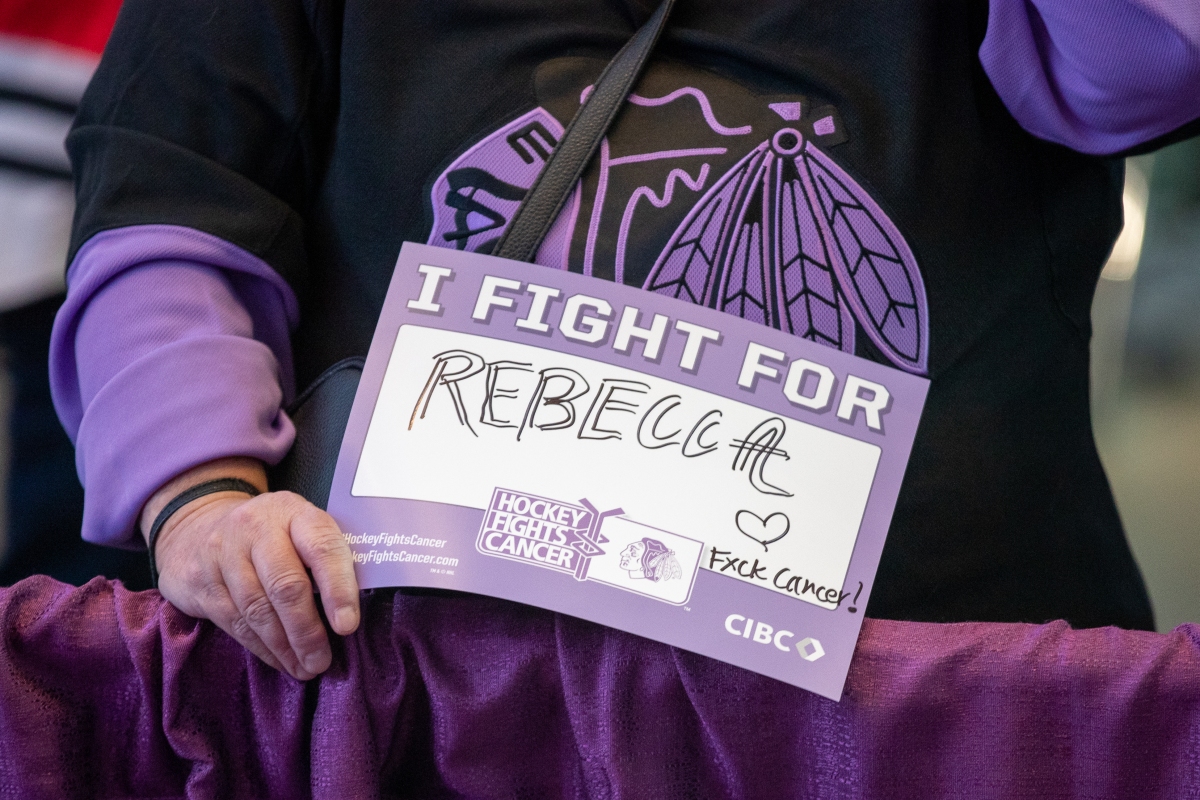
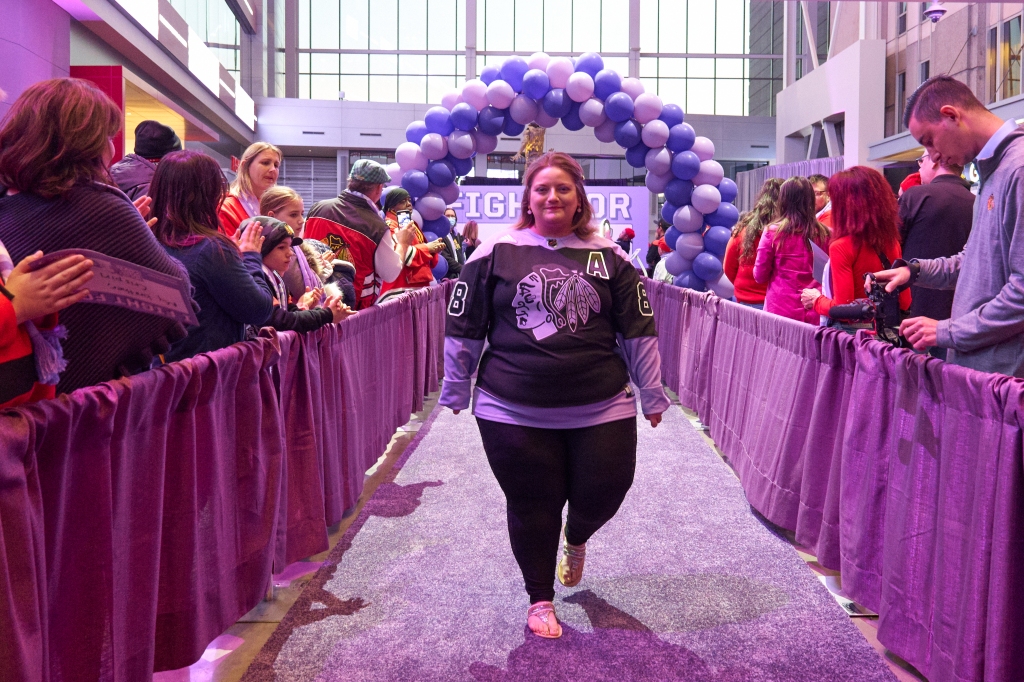
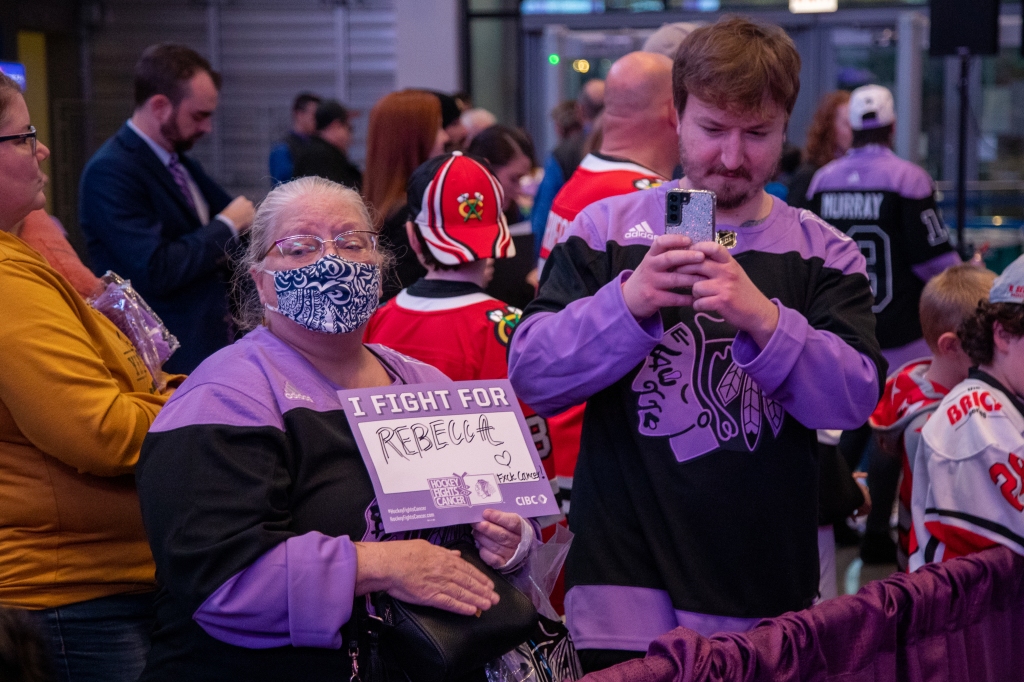
Last Thursday (11/03/2022), I got to take part in the Chicago Blackhawks’ Hockey Fights Cancer celebration at the United Center and walk the purple carpet.
The National Hockey League (NHL) commemorates Hockey Fights Cancer month every November, which celebrates survivors and thrivers and honors those who have passed away from cancer (all types).
This was my second year walking the purple carpet, but my first as a breast cancer survivor.
When I walked last year, I was in the midst of treatment. It was late November 2021, and I had just finished radiation, which was the fourth step in my five-step treatment plan: IVF + oocyte retrieval, chemotherapy, surgery, radiation, and immunotherapy. While I had already been declared no evidence of disease (NED) after my surgical pathology report came back in September of 2021, it was weird for me to call myself a “survivor” while I was still in active treatment. So this year I was able to call myself a survivor and actually feel like one six months out of active treatment.
While lining up to walk the carpet, I met a few other wonderful women who have also either battled or are going through treatment for breast cancer currently, and we got to exchange numbers and connect with each other. There were all types of cancer patients in line: children and teens, adult women and men, and so many types of cancer were represented. Even so, I was the only 20-something in the line. Everyone was either a child, teen, or 40+ years old (as cancer patients tend to be).
Although being the only person your age can feel isolating, I was happy that the Blackhawks shared my story with the attendees. I wrote this in my intro paragraph (that they read aloud as I walked the carpet):
Rebecca was diagnosed with HER-2 positive, Stage 2B breast cancer (Invasive Ductal Carcinoma) in March of 2021, 10 days after turning 27 years old. She endured 13 months of intensive treatment, including IVF and egg retrieval surgery, 6 rounds of chemotherapy, a lumpectomy surgery, 33 rounds of radiation, and 11 targeted therapy HER2+ infusions. She finished all treatment in April of 2022 and has been declared no evidence of disease (NED) since undergoing a successful treatment plan with a positive response to chemo and surgery.
Rebecca runs a website, CandidlyCancer.com, which aims to help newly-diagnosed breast cancer patients and educate people about women diagnosed with breast cancer before the age of 30. She also works as a mentor to newly-diagnosed breast cancer patients with Imerman Angels and is the volunteer events coordinator for the Young Survival Coalition of Chicago.
While having cancer isn’t a club anyone wants to be a part of, there are truly some incredible people you’ll encounter along the way who understand what you’ve gone through in a way nobody else truly can. I’m so blessed to have had this opportunity and so grateful to my favorite team for the best sport in the world for sharing my story and the stories of so many others affected by cancer.
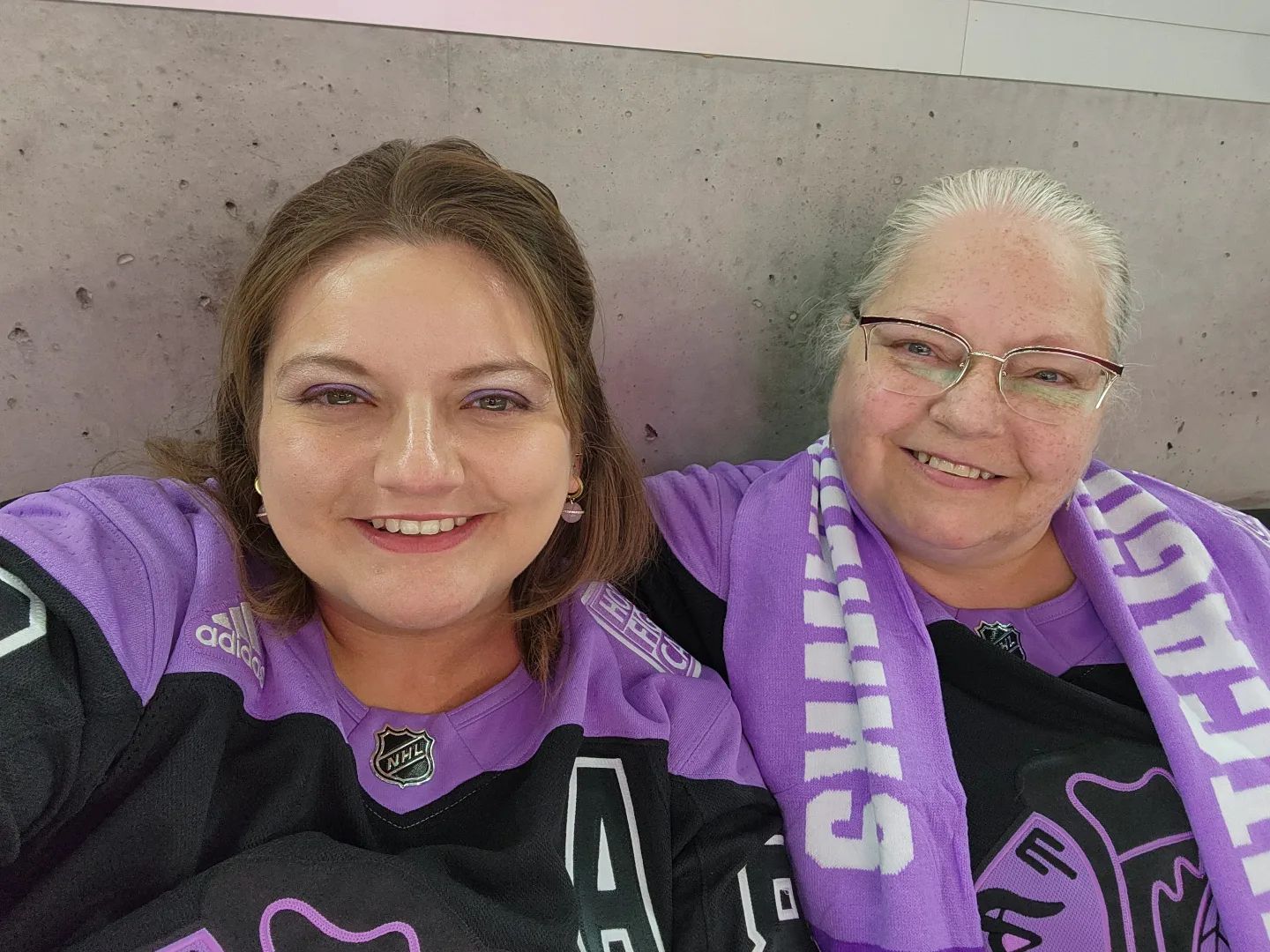
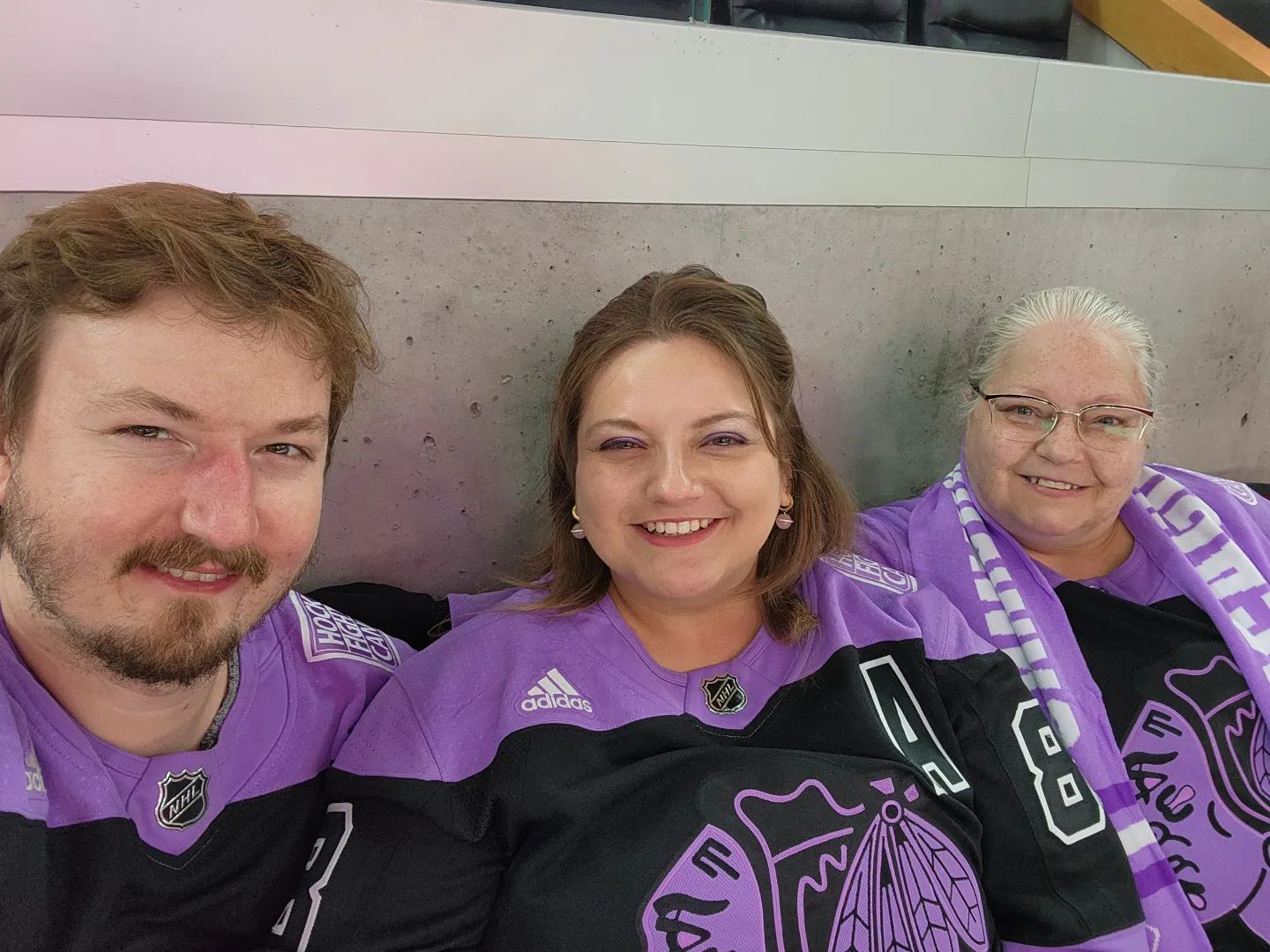
Thank you again to the Blackhawks, the NHL, and for my forever supporters, Cindy (my mom) and Alen (my bf) for coming out to celebrate with me and see the Hawks win a hell of a game!
I’m excited to announce that as of September 1st, 2022, I’ve become Co-Coordinator for the Chicago outlet of the Young Survival Coalition!
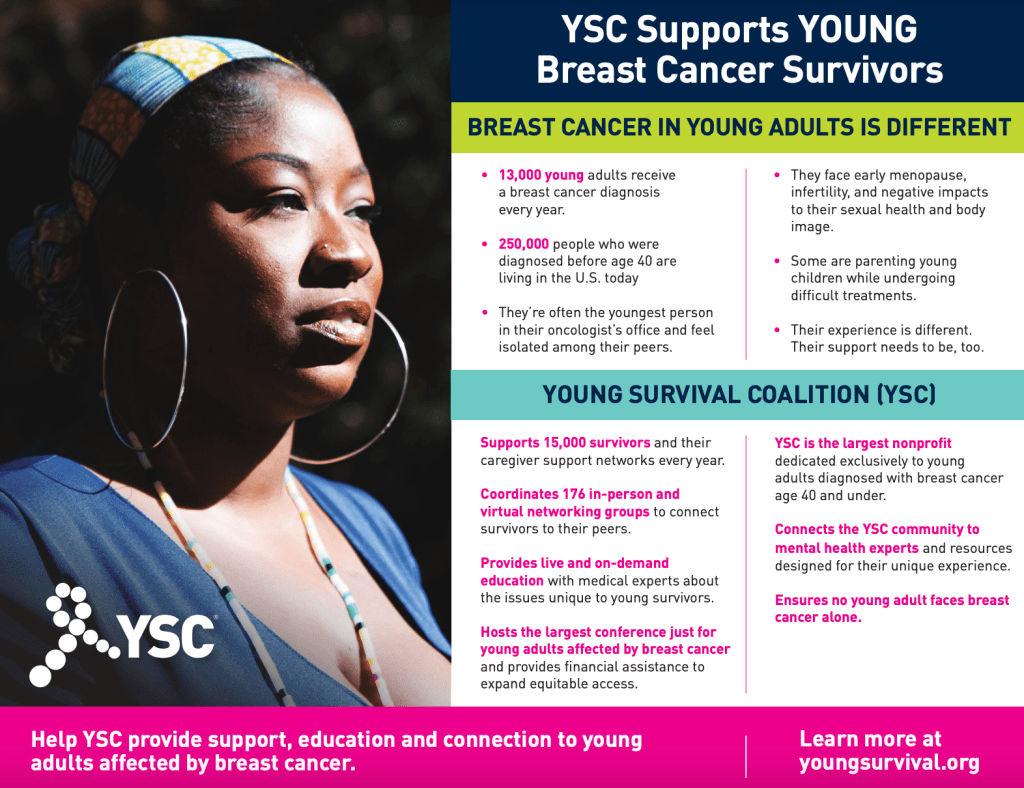
For those of you who don’t know, Young Survival Coalition is an organization geared toward providing support and community for young women who have been diagnosed with breast cancer before age 40.
As an individual who was diagnosed fewer than two weeks after I turned 27, this organization’s mission is incredibly important to me and aligns with why I created Candidly Cancer in the first place. The statistics behind breast cancer in women younger than 40 shows the need for a community like YSC.
Breast cancer in young women has historically been underrepresented in most discussions surrounding “who” gets breast cancer. While cancer at any age takes a toll on the bodies and minds of the people affected, young women face higher chances of being diagnosed with more aggressive cancers, receiving less funding and research toward how young adults are affected by breast cancer, greater financial and relationship stability concerns, and longstanding issues with body image and mental health.
Since 1998, Young Survival Coalition has grown from a single group out of NYC to an international nonprofit with over 170 local Face 2 Face networking groups (one for which I am now a co-coordinator), an online community, and a conference specifically geared toward young women who have breast cancer.
As a Coordinator for the YSC Chicago F2F network, my responsibilities include planning events for our local chapter so other young women who are either going through treatment or have previously gone through treatment for breast cancer have opportunities to meet face-to-face, get to know each other, grow a community, and build friendships!
I’ve always had an affinity for event planning and coordination; now I get to do it for other young cancer survivors and thrivers. All this is to say: I am so thrilled to be the newest Face 2 Face Coordinator for the YSC Chicago F2F network, and I’m happy to be able to volunteer my time and event coordination leadership skills to such a wonderful organization.
Want to help YSC and young survivors or thrivers like me? Donate to YSC today.
Hearing the news you have cancer is a fucking nightmare.
Hearing the news you don’t have cancer anymore is a fucking relief.
And sharing the news online is a great way to raise awareness about cancer, especially in the adolescent and young adult (AYA) community.
That said, an uncomfortable online trend I’ve noticed over the past year or so is people who have never had cancer making posts/statements about them…still not having cancer.
Yeah, I wouldn’t believe it either unless I saw it myself. And I have. At least four times in the past 12 months. What might this sound like?
For example:
“My mammogram came back clear! Yay for me!” And they’ve never had cancer before.
“I had a scare but actually it was nothing, and I don’t have cancer, haha isn’t that cool!” With the undertone of I didn’t have cancer before, either, but I also don’t now.
Or saying they or someone they know is “cancer free” when they were seen for a benign, non-cancerous lump and were never previously diagnosed with cancer. So they can’t actually be free of cancer that they’ve never had.
I know you might be confused as to how this is “bad,” celebrating not having cancer, and normally I’m a “live and let live” kind of gal, but it comes off braggadocios to celebrate something you didn’t actually overcome. How can you celebrate (publicly) “not having cancer” when you already didn’t have cancer?
It’s like telling someone whose house recently burnt down “Omg I left the stove burner on and I thought my house was going to burn down! But thank God it didn’t!” Would you do that? Would you knowingly comment some celebratory brag about something you didn’t actually endure?
I get wanting to “raise awareness” about getting your mammograms or other preventative scans and screenings for cancer, but it’s in really poor taste to brag about not having cancer when there are people out there who aren’t so “lucky” to go in and have a routine scan with no bad news.
Or when actual cancer thrivers (see: those with incurable cancer and those in active treatment) and survivors go in for scans and celebrate their clear scans as a win…
Because for them, IT ACTUALLY IS A WIN. BECAUSE THEY HAVE A HISTORY OF CANCER. So NOT having cancer *again* is something to brag about.
But you having clear scans on routine check-ups or a “scare” that wasn’t actually anything to begin with isn’t a “celebration” inasmuch as an expectation. Even if you have a family history of the disease, bragging online about not having cancer when you haven’t had it before is a REALLY WEIRD FLEX – whether you want to hear that or not. And it’s disrespectful to read for people who do or have actually had it.
Look, we’re all thrilled you’re healthy, but damn if it doesn’t feel like a slap in the face to those of us who’ve actually had cancer or are currently enduring treatment for it. We weren’t so lucky. We didn’t get to just breathe a sigh of relief and carry on with our days. And some cancer thrivers never will.
If you’re announcing your scan results because you want to “raise awareness” about cancer, you don’t need to brag about not having fucking cancer.
Instead, you can say, “Hey everyone! Remember to get your annual mammogram!” “Check your breasts on the first of the month!” “Donate to/support X fund for people undergoing cancer treatment!” Don’t make it about you not having cancer when you never fucking did.
From the inside looking out again, it seems obvious to not say these things to someone undergoing treatment for cancer. But from the outside looking in, you probably wouldn’t know any better. And we know you have good intentions, but a looooot of these statements come across flippant and tone deaf.
What not to say to someone with cancer
Here are a few things you should probably – no, DEFINITELY – not say to any cancer patient ever. Not even your bff. Not even your mom. Not even your coworker. Nobody. Not ever.
Oh, did you do something to your hair?
Yeah, I got cancer.
But you look so good with short hair!
Thanks, I guess? It wasn’t a choice, and I don’t feel comfortable with it…but thanks.
At least you have a good shaped head!
What??? What compels you to say such a thing?
It’s not that bad – at least it’ll grow back!
Cool. Let’s cut your hair off then if it’s no big deal!
I could never do chemo.
Cause I had “do chemo” on my bucket list, right?
Have you tried [insert holistic, unproven, bullshit] instead of chemo?
Look, I’ll take all the woo woo stuff you’ve got, but I’m still doing chemo!!!
I had cancer, too, but I cured it holistically!
No you didn’t lol.
Well at least you have the good cancer!
No cancer is good cancer. No, not even cancers with higher survival rates. All cancers are bad, even if some prognoses are worse.
You don’t even look sick!
That’s cause when I’m feelin’ like absolute garbage, I stay home. If you see me out and about, I’m feeling OK that day.
You’re so brave / I could never do what you’re doing.
I know, this one’s tough to hear. But I’m not brave. I’m doing what I have to do. Brave is performing in front of a crowd. Brave is jumping out of a plane. Doing medically mandated treatments is just… necessary. And you could do it, too, if you had to. But let’s hope you don’t have to.
You’ll be fine!
Will I be fine? I know you mean well and don’t want me to worry (and you don’t want to worry, either), but this is such a brush-off way of saying “don’t worry about it!” – especially when we don’t know if I will, in fact, be fine.
I understand! My [much older relative] had cancer, too!
As someone on the outside of things (i.e. not actually receiving treatment or dealing with a diagnosis yourself), no, you don’t actually understand, and their cancer isn’t my cancer. You might be “familiar” with some cancer-related things, but you don’t understand what *I* am going through. No, not even if your relative or friend went through cancer treatment. You do not understand how it feels to be in the position of someone with cancer. (And I hope you never do.)
Oh, also they died.
Bro what? That really fills me up with hope, thanks!!!
Omg, don’t joke about [cancer-related thing] like that!
If you’re not the person with cancer, don’t tell the person with cancer how to cope with their own fucking cancer. I’m gonna share some dark humor memes and joke about cancer because I can, and if it makes you uncomfortable, I don’t give a shit.
Good thing you’re done with treatment and can go back to normal now!
There is no “normal”. Having cancer will always warp our idea of what “normal” is, and we’ll always be worried about the cancer coming back. I’m trying to recover and be in a place where I was before cancer, but assuming everything’s just…back to the way it was is, in a word, asinine.
—
Check back soon for another installment of “what not to say to other cancer patients even if you, yourself have/had cancer”. Because believe it or not, some of the most cringeworthy things have come from the mouths of other cancer patients.













 Candidly Cancer